
Data Backup
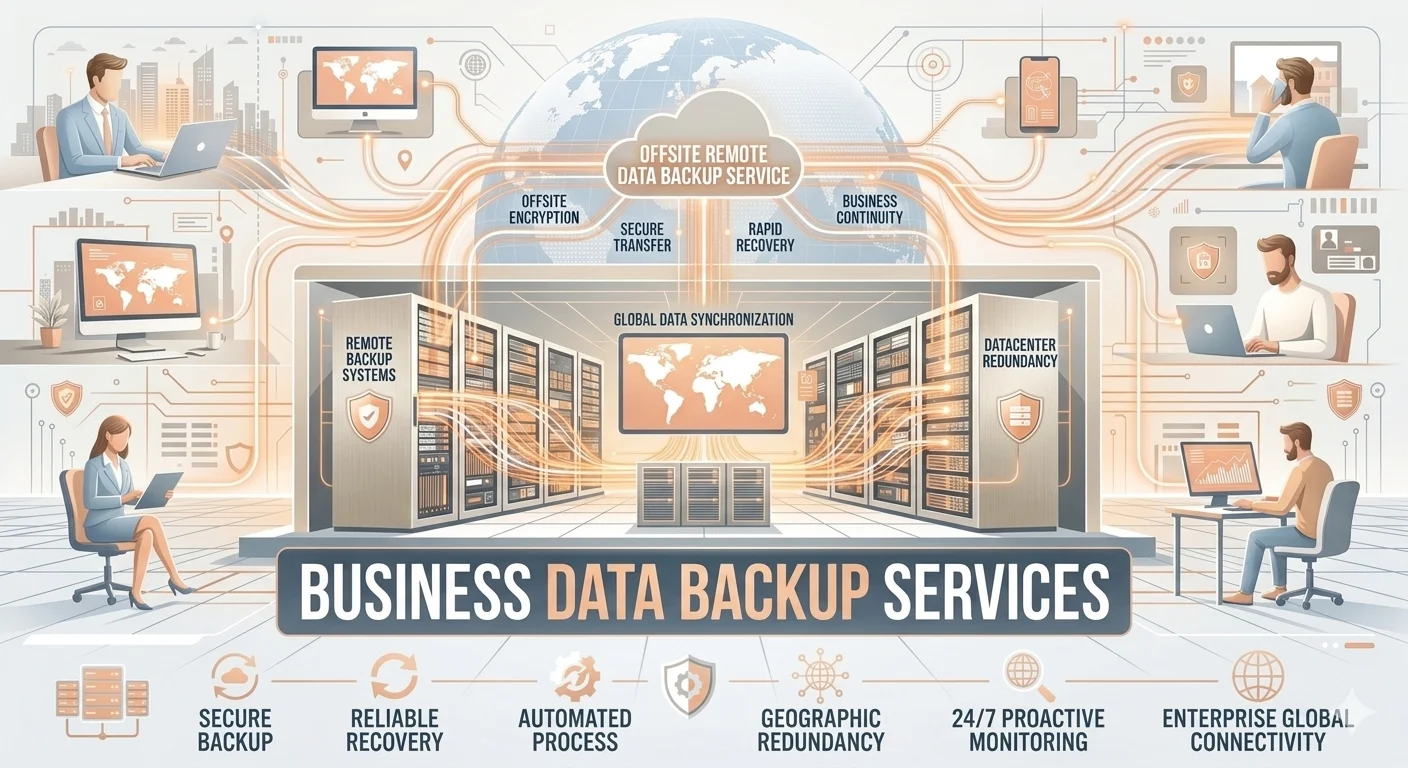
Enterprise Data Center Backup Engineered for Absolute Continuity.
Protect complex multi-cloud, physical, and virtual workloads with automated replication, military-grade security, and rapid failover mechanisms.
Zero-Downtime Architecture:
- Achieve real-time replication with seamless failover protocols to prevent localized physical outages from disrupting operations.
Absolute Compliance:
- Built to meet strict global data sovereignty and industry compliance benchmarks, including SOC 2, HIPAA, and GDPR.
Massive Cost Control:
- Eliminate volatile cloud egress fees through predictable, fixed-rate enterprise pricing tiers.
Pre-Configured Cloud Tiers
- Immutable Air-Gapped Backups: Write-Once-Read-Many (WORM) storage architecture prevents ransomware scripts from encrypting or modifying historical archives.
- End-to-End Encryption: Data remains fully encrypted using AES-256 protocols during transit (TLS 1.3) and while at rest within our storage volumes.
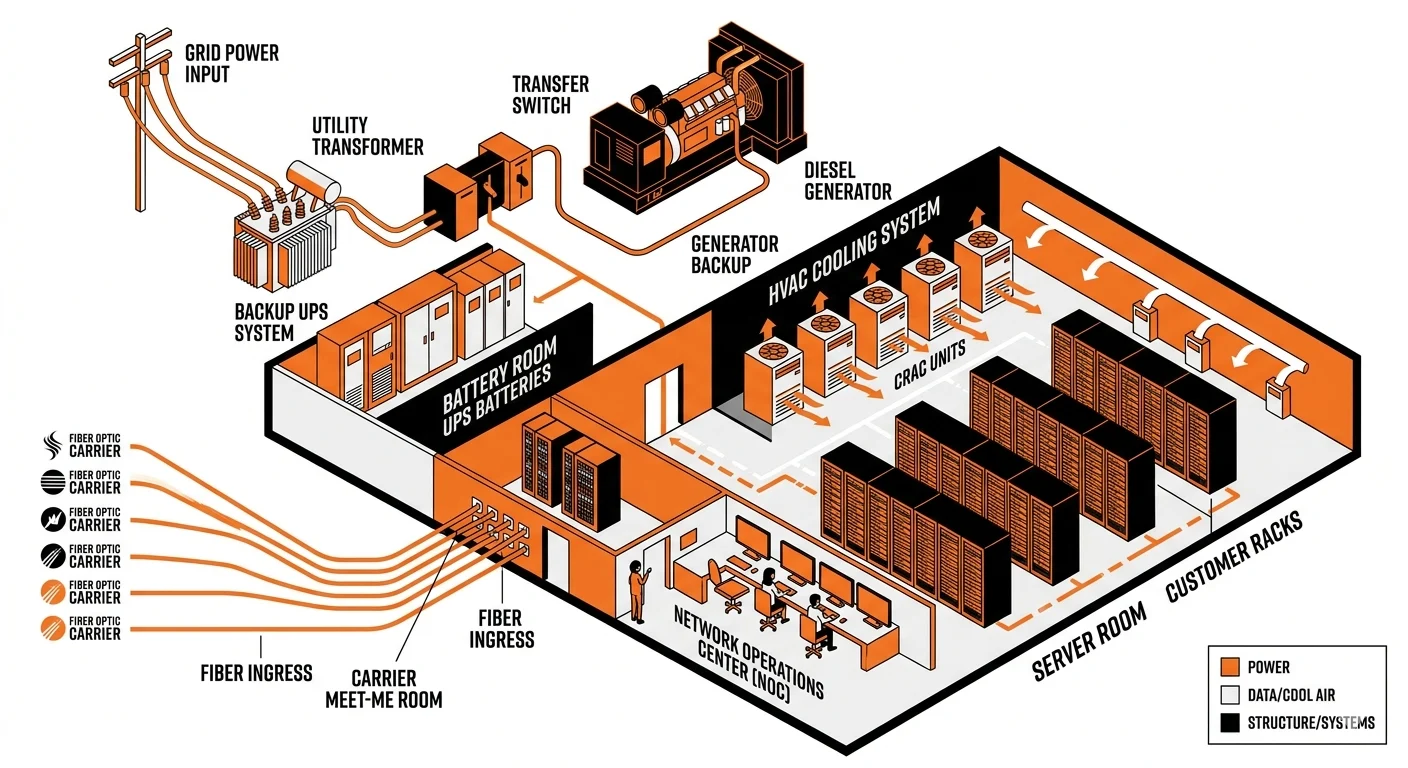
- Physical Facility Hardening: Equipment is housed in facilities protected by multi-factor biometric authentication, physical mantrap systems, continuous ballistic-rated perimeter monitoring, and 24/7/365 specialized security details.
- Infrastructure Redundancy: Uninterruptible Power Supply (UPS) battery banks bridge instantaneous power drops, while independent diesel-powered generation plants ensure continuous operation during grid failures.
Enterprise Security Features
Our remote data centers operate with military-grade infrastructure to insulate corporate digital assets from logical and physical vectors of compromise.
- Immutable Air-Gapped Backups: Write-Once-Read-Many (WORM) storage architecture prevents ransomware scripts from encrypting or modifying historical archives.
- End-to-End Encryption: Data remains fully encrypted using AES-256 protocols during transit (TLS 1.3) and while at rest within our storage volumes.
- Physical Facility Hardening: Equipment is housed in facilities protected by multi-factor biometric authentication, physical mantrap systems, continuous ballistic-rated perimeter monitoring, and 24/7/365 specialized security details.
- Infrastructure Redundancy: Uninterruptible Power Supply (UPS) battery banks bridge instantaneous power drops, while independent diesel-powered generation plants ensure continuous operation during grid failures.
Frequently Asked Questions (FAQ)
What is the difference between RTO and RPO?
- Recovery Time Objective (RTO) defines the maximum acceptable duration of infrastructure downtime before business operations must be completely restored.
- Recovery Point Objective (RPO) measures the maximum allowable age of data that can be lost due to an incident, determining your required backup frequency.
How does deduplication lower data center costs?
Our software uses block-level inline deduplication to analyze incoming streams and strip out duplicate chunks before they are written to disk. This aggressively minimizes the required bandwidth and shrinks the storage footprint by up to 70%.
Can we perform non-disruptive disaster recovery testing?
Yes. Our platform uses isolated sandbox networks within the destination data center to spin up fully operational virtual models of your infrastructure, enabling you to validate recovery playbooks without affecting active production pipelines.