
Managed Router
Managed Router services
are critical for businesses because they eliminate network downtime, maximize data security, and free internal IT teams to focus on revenue-generating projects rather than daily troubleshooting. By outsourcing routing infrastructure to a Managed Service Provider (MSP), a company transforms its network from a complex technical burden into a highly optimized, predictable operational asset.
Maximum Uptime and Continuity
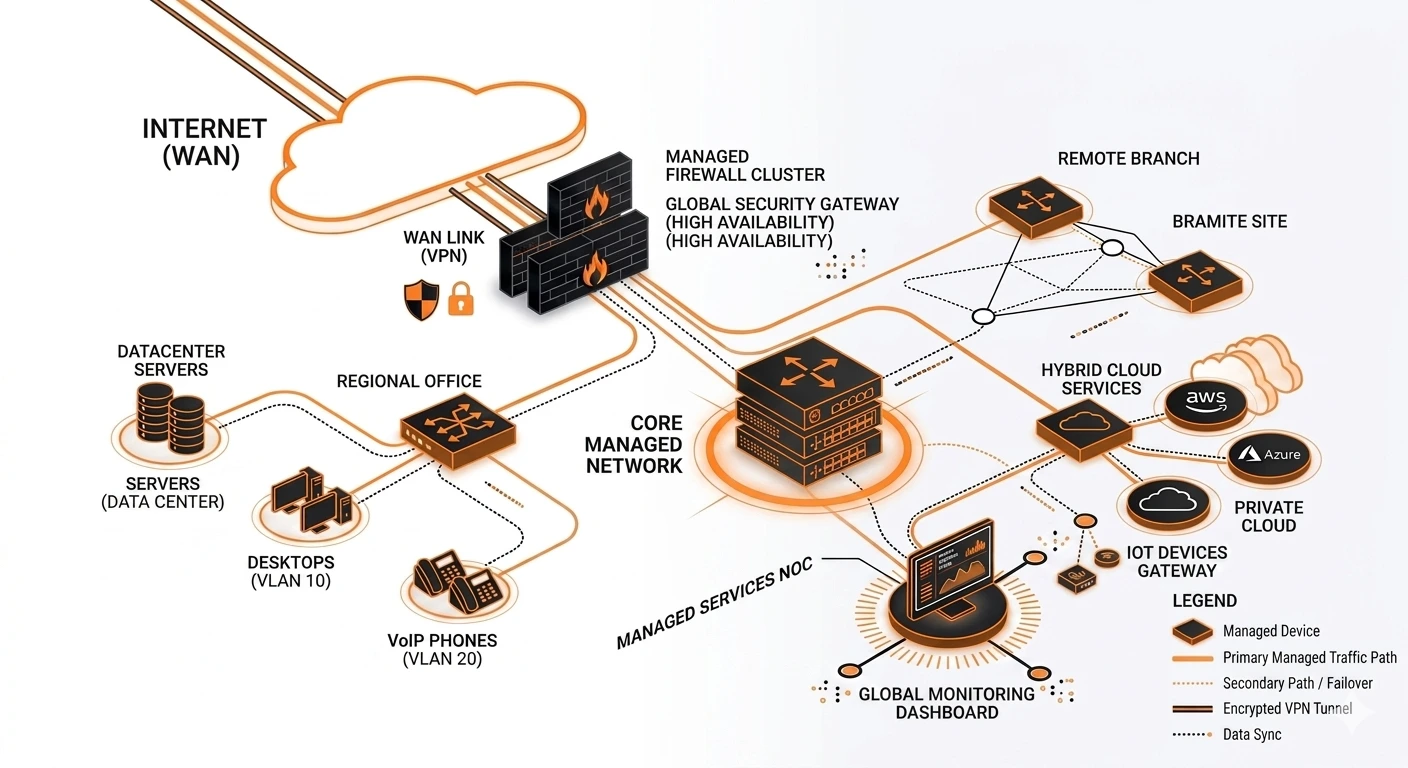
- 24/7 Monitoring: Providers continuously scan your network to detect and resolve performance bottlenecks or anomalies before they disrupt your business.
- Automated Failover: Managed services often configure secondary backup routes or enable automated hardware failover, ensuring your internet connection stays up even if a primary line fails.
- Disaster Recovery: Network configurations are securely backed up in the cloud, enabling rapid restoration in the event of unexpected site disasters.
Robust Cybersecurity and Compliance
- Proactive Patching: MSPs handle all routine firmware updates, security patches, and software upgrades instantly to block newly discovered vulnerabilities.
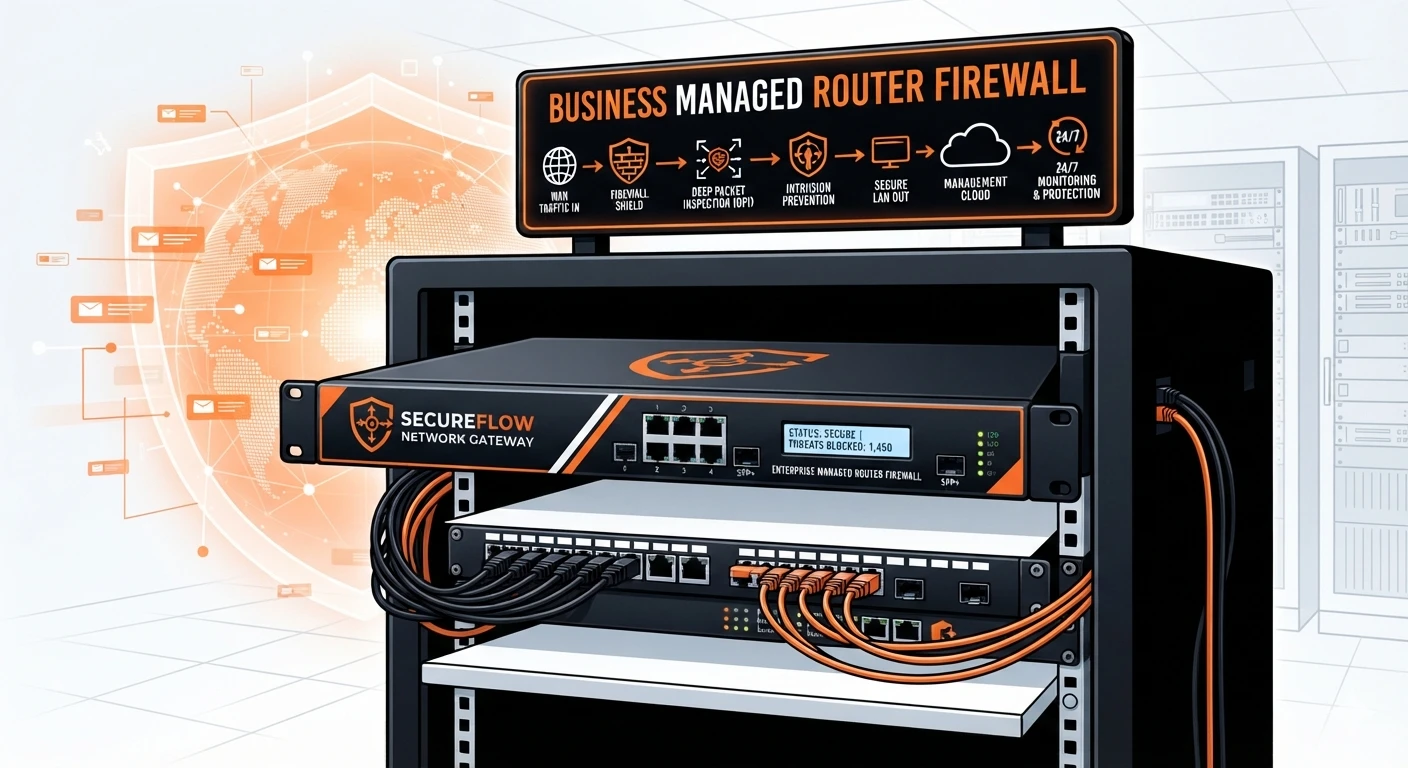
- Advanced Traffic Threat Control: Routers are configured with strict built-in firewalls, access control lists, and intrusion prevention layers.
- Regulatory Compliance: Experts ensure your network architecture aligns with industry compliance requirements (such as PCI DSS for retail or HIPAA for healthcare).
Optimized Network Performance
Traffic Prioritization (QoS):
Providers tag data to prioritize critical operations—such as VoIP calls and video conferencing—over non-essential web traffic, thereby eliminating lag.
Expert Configuration:
Network professionals optimize data paths to reduce latency, boost speeds, and stabilize connections across remote offices. Financial Predictability and Flexibility
OpEx vs. CapEx:
Rather than paying heavy upfront capital expenses for enterprise-grade hardware, businesses pay a predictable, flat monthly service fee.
Included Hardware Lifecycle:
The provider owns the hardware lifecycle, meaning equipment upgrades, repairs, and device replacements are covered at no additional cost to you.
Seamless Scalability:
As your business expands, adding new branches, remote users, or bandwidth limits requires a simple config change by the provider, rather than local deployment.
Efficiency Gains for Your IT Staff
Elimination of Firefighting:
Your internal IT professionals can stop spending hours fixing connection drops, cable issues, and hardware bugs.
Focus on Strategy:
Offloading routine maintenance empowers your core technical team to focus purely on strategic software deployments, digital transformation, and business growth initiatives.